3.25.2026
CDC Measles Waterwaste Report
MEMORANDUM
TO: Public Health Leadership FROM: Public Health Analyst DATE: October 26, 2023 SUBJECT: Briefing on Measles Wastewater Surveillance in the United States
1. Executive Summary
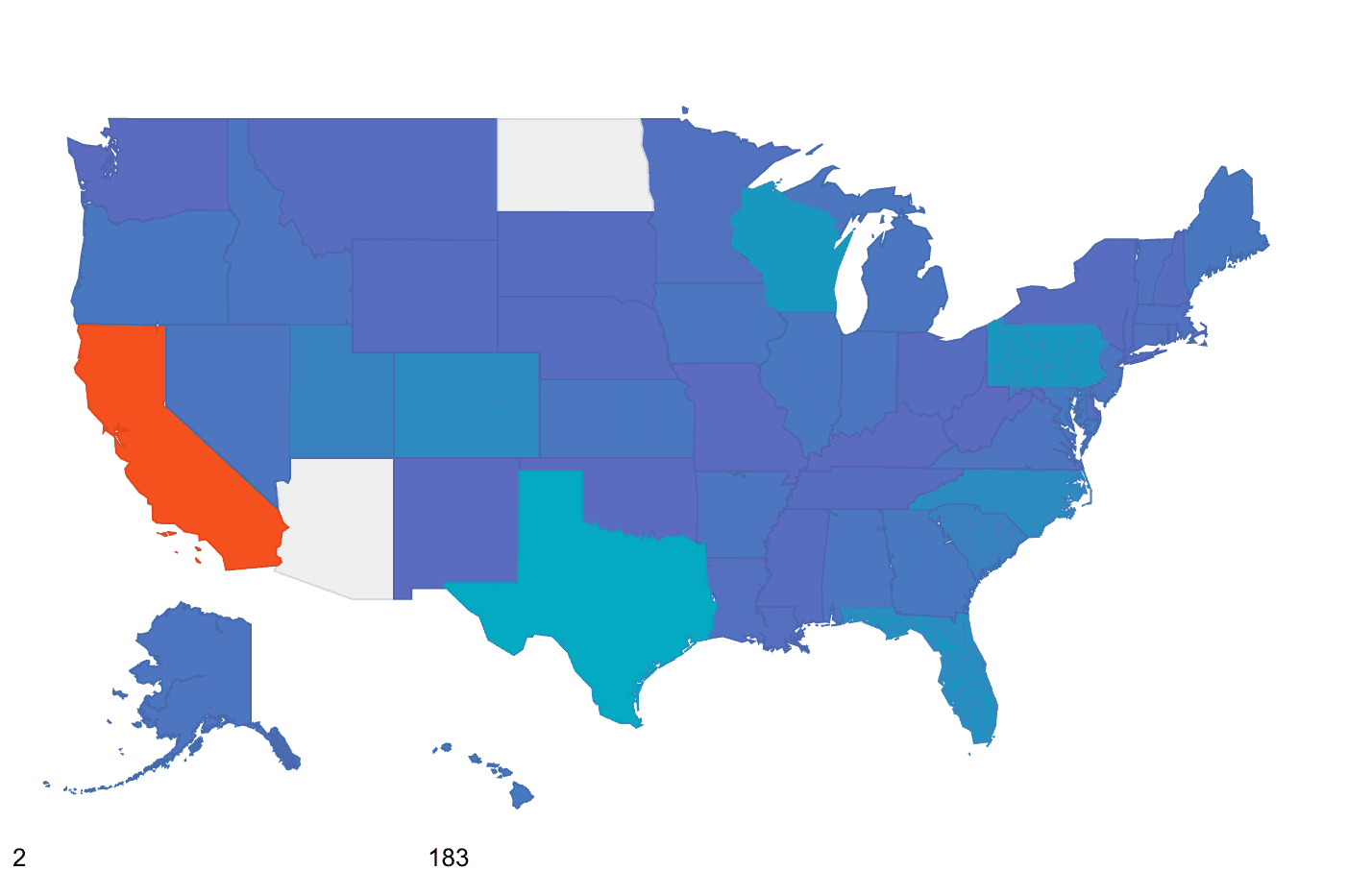
This report provides an overview of the current state of measles wastewater surveillance efforts across the United States. Analysis of state-level data indicates that surveillance implementation is highly variable. While a significant number of samples have been collected nationally, activity is concentrated in a few key states, with California and Texas leading the effort. Coverage patterns suggest a focus on large metropolitan areas in some states, while others have more distributed or smaller-scale monitoring. Significant geographic gaps exist, with some states having minimal or no reported sampling activity. This patchwork of surveillance creates potential blind spots for the early detection of measles, a highly contagious and vaccine-preventable disease. This briefing outlines these patterns and provides recommendations to standardize reporting, strategically expand surveillance, and better integrate data for enhanced national public health preparedness.
2. National Overview
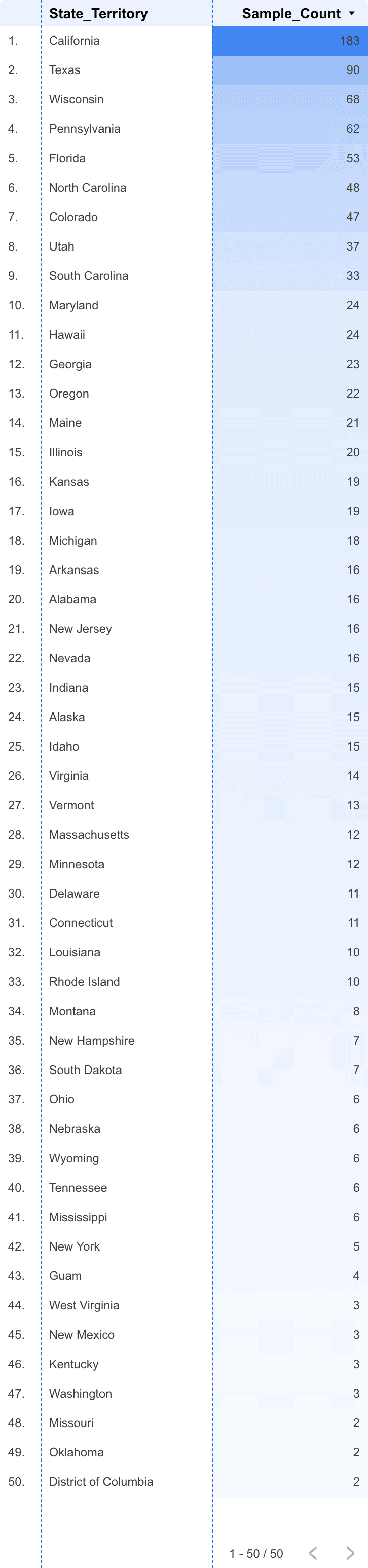
Wastewater surveillance for measles is active in at least 46 states, the District of Columbia, and Guam. A total of 1,069 samples have been reported across these jurisdictions. However, the level of activity varies dramatically, demonstrating a lack of a unified national strategy. The number of samples collected at the state level ranges from 183 (California) to as few as two (Missouri, Oklahoma, District of Columbia). This wide disparity underscores the decentralized and uneven nature of current surveillance efforts.
3. States with Highest Sampling Activity
A small number of states account for a disproportionately large share of the national sampling effort. The seven states with the highest number of collected samples represent over half (54%) of all samples reported.
Top States by Sample Count:
California: 183 samples
Texas: 90 samples
Wisconsin: 68 samples
Pennsylvania: 62 samples
Florida: 53 samples
North Carolina: 48 samples
Colorado: 47 samples
The robust sampling in populous states like California, Texas, and Florida is a positive indicator, as these areas often serve as major travel hubs with a higher risk of measles importation.
4. Population Coverage Patterns
The data on average population covered per sampling system reveals different surveillance strategies among states.
Focus on High-Density Urban Areas: Several jurisdictions report very high average population coverage, suggesting a strategy centered on large metropolitan wastewater treatment plants. Notable examples include the District of Columbia (1,600,000), Massachusetts (595,057), New York (580,217), and Kentucky (423,913). While efficient for monitoring large populations, this approach may miss outbreaks in smaller, unmonitored communities.
Focus on Smaller or More Numerous Communities: Conversely, some states report a much lower average population coverage, which may indicate a strategy of monitoring smaller towns, rural areas, or using a more distributed network of sites. Examples include Washington (10,150), New Hampshire (14,167), Vermont (16,017), and Maine (18,840).
It is important to note that the "average population covered" metric does not represent the total population under surveillance within a state.
5. Geographic Patterns and Gaps
While surveillance is geographically widespread, significant gaps in coverage exist.
Regional Concentration: Surveillance activity is strongest in the West (led by California), the South (led by Texas and Florida), and parts of the Midwest (led by Wisconsin).
Identified Gaps: Based on the provided data, two states—Arizona and North Dakota—had no reported sampling activity.
Minimal Activity: Several states reported fewer than ten samples, indicating very limited or nascent surveillance programs. These include New York (5), Ohio (6), and Tennessee (6), which are populous states where limited surveillance constitutes a significant potential vulnerability. The low sampling activity in these states represents a critical gap in the national surveillance network.
6. Public Health Interpretation
Wastewater surveillance is a powerful, non-invasive tool for early detection of communicable diseases like measles. The presence of measles virus in wastewater can signal community transmission before clinical cases are diagnosed, providing public health officials with a critical head start to implement control measures, such as vaccination campaigns and public health messaging.
The current patchwork of surveillance means that this early warning capability is not uniformly available across the nation. States with robust programs are better positioned to detect and respond to silent or overt transmission. Conversely, states with minimal or no surveillance are reliant solely on traditional clinical case reporting, which can be delayed and may not capture the full scope of an outbreak until it is well-established.
7. Limitations of the Data
The conclusions of this analysis are subject to several key limitations:
Timeframe Unknown: The data does not specify the time period over which these samples were collected, making it difficult to assess sampling frequency or intensity.
No Outcome Data: The dataset details surveillance effort (number of samples) but not results (measles detections).
Ambiguous Coverage Metric: "Average population covered" is an imprecise metric. It does not clarify the total unduplicated population under surveillance in each state or the number of sites sampled.
Lack of Context: The data does not provide context on sampling strategy (e.g., routine monitoring vs. targeted sampling in response to a known case).
8. Recommendations for Surveillance Planning
To strengthen the national measles surveillance posture, the following actions are recommended:
Establish National Reporting Standards: Advocate for the adoption of standardized data reporting for wastewater surveillance, to include the number of sites, sampling frequency, total population coverage, and testing results.
Prioritize Expansion to Surveillance Gaps: Provide technical and financial support to establish or expand surveillance in states with no (Arizona, North Dakota) or minimal (<10 samples) reported activity, with a focus on states that have large populations.
Promote Strategic Site Selection: Encourage states to develop surveillance plans that balance monitoring of high-risk international ports of entry and dense urban centers with coverage for areas known to have low vaccination rates.
Integrate Surveillance Data Streams: Develop platforms and protocols to integrate wastewater surveillance data with clinical case data and vaccination coverage rates. This holistic view will enable a more sophisticated and predictive approach to mitigating measles outbreak risk.